Productivity Hacks
The AI Content Refresh Workflow That Gets Old Posts Moving Again
A practical AI content refresh workflow for improving old posts, lifting search traffic, and finding easy wins without rewriting everything.
Most people treat old blog posts like leftovers in the back of the fridge. They remember the post exists, feel vaguely guilty about it, and then publish something new instead.
That is expensive.
If a page already has impressions, links, internal links, or even a tiny trickle of traffic, it has more momentum than a blank document. A smart refresh can do more for search traffic than another shiny new article that Google has to discover from zero.
The lazy move is not “rewrite everything.” The lazy move is to find pages with proof of life, fix the parts that are holding them back, and let the URL keep compounding.
What Counts as a Content Refresh?
A refresh is a meaningful improvement to an existing page.
That can mean updating outdated tool names, adding missing steps, replacing weak examples, improving the title, answering a question competitors cover better, adding a comparison table, or tightening a meandering intro.
It does not mean changing three words and bumping the date. Google is not impressed by calendar theater.
Use this standard: if a returning reader would notice the page is more useful, it is a refresh. If only your CMS timestamp changed, it is not.
Start With Pages Google Already Knows
Open Google Search Console and sort pages by impressions over the last 90 days. You are looking for three types of pages.
High impressions, low click-through rate. These pages are being seen but ignored. The title and meta description are probably weak, or the article angle does not match the searcher’s intent.
Positions 8-20. These pages are close enough to matter. They are not buried in the graveyard, but they need a sharper answer, better internal links, or more topical depth to move.
Declining winners. These pages used to get traffic and now they do not. Something changed: competitors improved, the query shifted, the tool changed, or the post got stale.
Do not start with pages that have no impressions, no links, and no clear keyword target. That is not a refresh. That is a rescue mission, and rescue missions are rarely lazy.
Use AI for Diagnosis, Not Blind Rewriting
AI is useful here because it can compare, summarize, and find gaps fast. It is dangerous because it will happily rewrite a decent article into beige soup if you let it.
Use a prompt like this:
I am refreshing an article targeting “[keyword].” Here is the current article: [paste article]. Here are three competing articles or summaries: [paste notes]. Identify what my article is missing, what is outdated, what sections should be cut, and what specific improvements would make it more useful to a reader. Do not rewrite yet. Give me an editorial plan.
That last sentence matters. Do not ask for a full rewrite first. Ask for diagnosis.
The goal is to come away with a punch list, not a new pile of generic paragraphs.
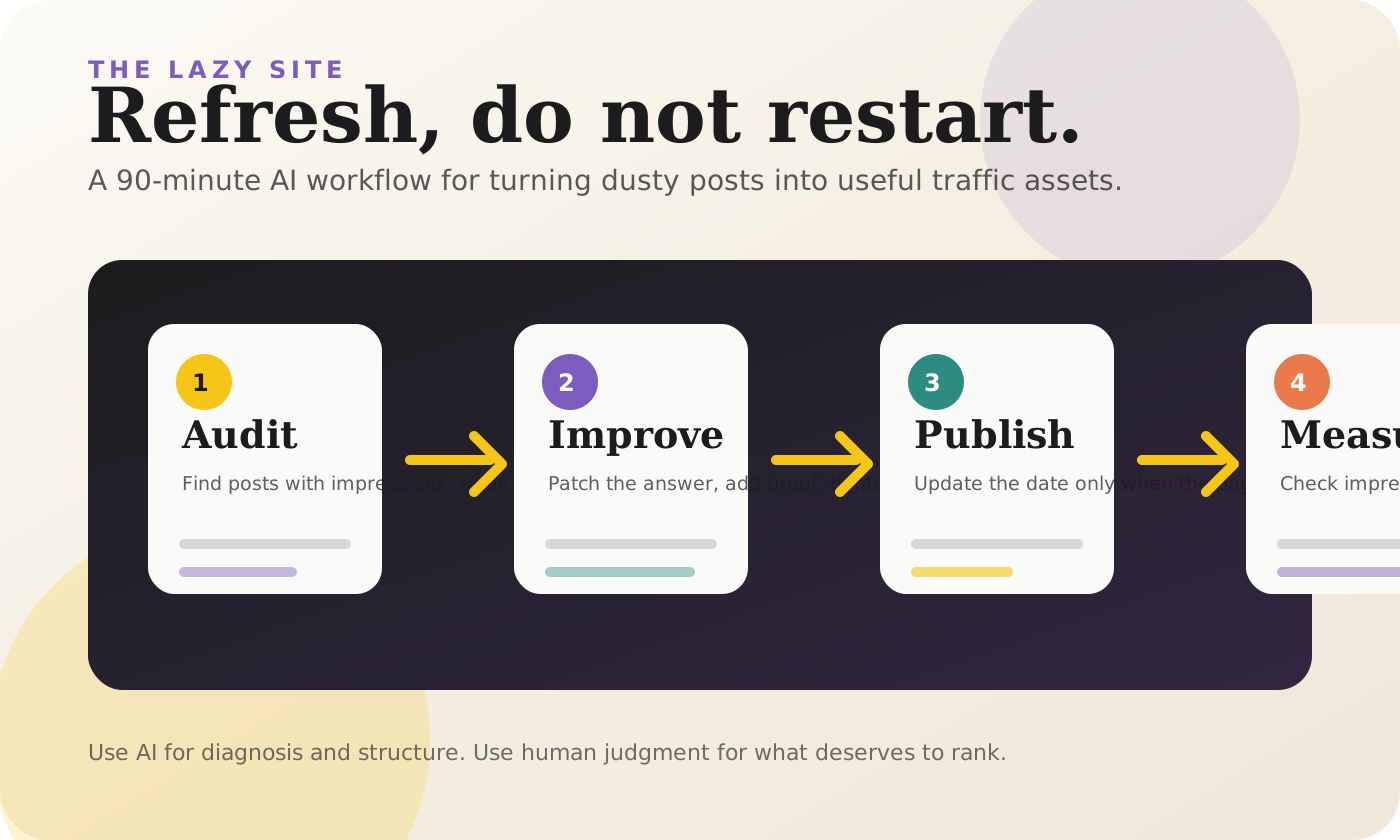
The 90-Minute Refresh Workflow
Set a timer. Old content can become a swamp if you let it.
Minutes 0-15: Pull the Evidence
Grab:
- Search Console queries for the page
- Current title and meta description
- Top ranking competitors
- Any comments, emails, or real reader questions
- Affiliate clicks or revenue data if the page has monetization
If you use an SEO tool, this is where Surfer SEO, Frase, or SearchAtlas can help. Run the current page through a content optimizer and note the obvious gaps. Do not worship the score. Use it as a flashlight.
If you do not already own one, compare the best AI SEO tools for 2026 before paying for a refresh-only workflow.
Minutes 15-35: Rewrite the Search Promise
Before touching the article body, rewrite the promise.
The title should make the page’s usefulness obvious. The intro should tell the reader they are in the right place within five seconds. The description should give Google a clean summary.
Weak title: “Best AI Tools”
Better title: “7 AI Tools I Would Actually Pay For as a Solo Creator”
Weak intro: “In today’s fast-paced digital world…”
Better intro: “I tested these tools against one boring question: did they save enough time to justify another monthly subscription?”
Lazy does not mean vague. Lazy means you remove the reader’s uncertainty quickly.
Minutes 35-65: Patch the Missing Sections
This is where most of the value happens.
Look for missing questions:
- Who is this for?
- Who should skip it?
- What does it cost?
- What is the fastest setup path?
- What breaks in the real world?
- What would you do first if you had one afternoon?
These sections add more value than another 600 words of generic explanation.
For tool reviews, add current pricing ranges, feature changes, and real tradeoffs. For how-to posts, add a checklist, example workflow, and “mistakes to avoid” section. For list posts, remove weak entries and add stronger ones.
If a tool or tactic is outdated, say so. Trust is a ranking asset, even if it does not show up in your analytics dashboard.
Minutes 65-80: Add Internal Links With Intent
Every refreshed post should point readers somewhere useful next.
If the post is about AI writing, link to your best AI writing tools roundup or Surfer SEO review. If it is about affiliate income, link to how to start affiliate marketing or AI affiliate marketing.
Do not add internal links like confetti. Add them where a reader naturally needs the next step.
Minutes 80-90: Republish and Track
Only update updatedDate or the visible date if the page changed meaningfully.
Then write down three numbers:
- Current average position
- Current click-through rate
- Current clicks over the last 28 days
Check again after 28 days. Not tomorrow. Not six hours later. Search needs time to digest.
What Not to Do
Do not use AI to rewrite every sentence. That usually removes the original insight.
Do not make the post longer just because competitors are longer. A better answer beats a bloated one.
Do not update 40 posts in one day and then wonder which change worked. Refresh in batches so you can learn.
Do not change the URL unless the old one is genuinely broken. URLs with history are assets.
The Refresh Scorecard
Before you call a refresh done, check the page against this simple scorecard:
Reader promise: Can someone understand the value of the article from the title and intro?
Current accuracy: Are tools, prices, dates, screenshots, and claims still defensible?
Search intent: Does the article answer what people are actually searching now?
Original usefulness: Does the page include examples, judgment, or workflow details that competitors do not?
Next step: Does the reader know what to do after finishing?
If the answer is no, keep editing. If the answer is yes, publish and move on. The lazy system works because you do not keep polishing forever.
Steal This System
Here is the weekly version:
- Open Search Console every Monday.
- Pick one page with impressions and weak CTR, or one page ranking between positions 8 and 20.
- Ask AI for an editorial gap analysis, not a rewrite.
- Improve the title, intro, missing sections, and internal links.
- Republish only if the page is meaningfully better.
- Track the 28-day result in a simple spreadsheet.
Do this every week for three months and you will have 12 stronger URLs instead of 12 more forgotten drafts.
New content matters. But refreshed content is often the quieter money. It already has a seat at the table. Your job is to make it deserve a better one.
Disclosure: This article may include affiliate links. If you buy through them, we may earn a commission at no extra cost to you. Learn more.
About Josh
Founder, The Lazy Site
Josh runs The Lazy Site. He's been building affiliate and content sites since the WordPress era — long enough to know which AI shortcuts actually save time and which just sound clever in a thread. Every tool reviewed here gets tested with real workflows, real money, and real deadlines.