Make Money Online
Build an AI Lead Magnet Funnel in One Weekend (Without Funnel Brain)
A realistic AI lead magnet funnel system for turning search traffic into email subscribers, affiliate clicks, and future buyers.
Search traffic is lovely until you remember one annoying fact: most visitors leave and never come back.
They read the post. They nod. Maybe they click an affiliate link. Maybe they do nothing. Then they vanish into the internet fog, where your carefully optimized article becomes one more tab they meant to revisit.
That is why a lead magnet matters.
Not because you need a 19-step funnel with fake scarcity timers and a webinar you secretly hate. Because if you can turn even a small slice of readers into email subscribers, every future article gets more valuable.
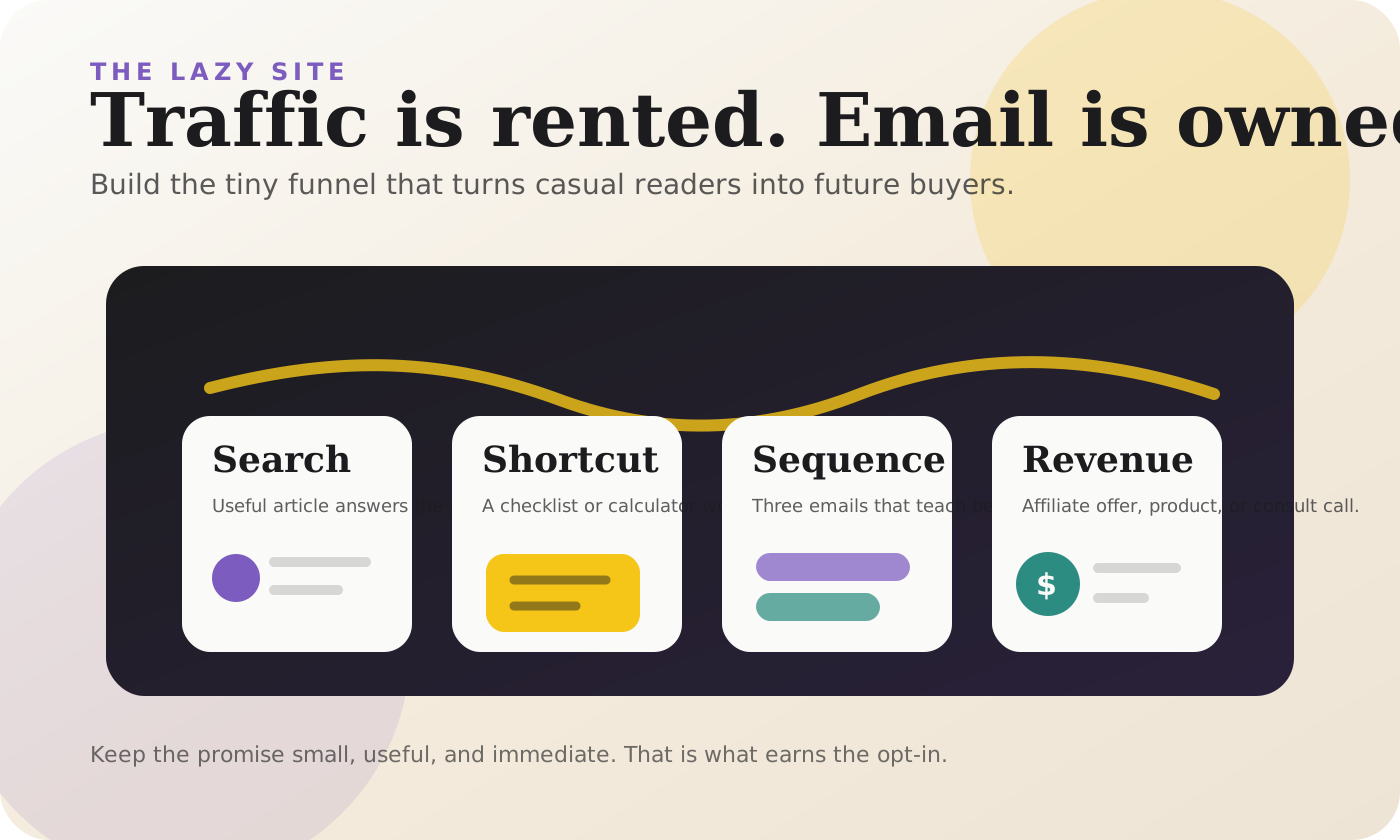
The lazy version is simple: one useful free thing, one short signup page, three helpful emails, and one relevant offer.
What Makes a Good Lead Magnet in 2026?
A good lead magnet solves a small, specific problem quickly.
Bad lead magnet: “The Ultimate Guide to Making Money Online”
Better lead magnet: “The 20-Minute AI Affiliate Article Brief”
Bad lead magnet: “Free newsletter”
Better lead magnet: “7 ChatGPT prompts that turn one product idea into a publishable review outline”
People do not give you their email because you are charming. They give it because the thing you offer reduces effort right now.
That is the entire game.
Pick the Funnel Goal First
Before opening Canva, ChatGPT, Systeme.io, or any other shiny dashboard, decide what the funnel is supposed to do.
There are three realistic goals for a small content site:
Affiliate clicks. You recommend tools and earn commissions when subscribers are ready to buy.
Digital product sales. You sell templates, checklists, swipe files, mini-courses, or paid guides.
Service inquiries. You use content to attract clients for consulting, implementation, writing, automation, or strategy.
Pick one primary goal per funnel.
If your lead magnet is for AI affiliate marketing, the natural offer might be a tool stack, hosting recommendation, or affiliate site checklist. If it is for small business automation, the natural offer might be a consultation or a software recommendation.
Fuzzy funnel goals create fuzzy emails. Fuzzy emails create unsubscribes.
Use AI to Find the Right Promise
Do not ask AI, “Give me lead magnet ideas.” You will get a buffet of obvious sludge.
Use this prompt instead:
I run a content site about AI tools, side hustles, and passive income. My audience is busy solopreneurs and small business owners. I want a lead magnet connected to this article topic: [topic]. Generate 10 lead magnet ideas that solve a specific problem in under 20 minutes. For each idea, include the promise, format, who it is for, and the paid or affiliate offer it could naturally lead to.
Then pick the idea with the cleanest connection between article, opt-in, and offer.
The best funnel does not feel like a detour. It feels like the next useful step.
The Weekend Build Plan
You can build a real version in two half-days.
Friday Night: Choose the Asset
Keep the format boring.
Good formats:
- Checklist
- Prompt pack
- Calculator spreadsheet
- One-page decision tree
- Swipe file
- Mini SOP
- Template
Avoid massive ebooks unless you enjoy creating unread PDFs. Most people do not need 47 pages. They need the next action.
For this site, strong lead magnet ideas would be:
- “The Lazy AI Tool Stack Calculator”
- “10 Affiliate Article Briefs You Can Steal”
- “The 30-Minute Content Refresh Checklist”
- “AI Side Hustle Validation Sheet”
- “The One-Page Funnel Builder for Lazy Creators”
Notice the pattern: specific, useful, fast.
Saturday Morning: Create the Lead Magnet
Use AI for structure, not final judgment.
Ask ChatGPT or Claude to draft the checklist, prompts, or worksheet. Then edit it like someone might actually use it on a tired Tuesday night.
Cut anything vague. Add examples. Add defaults. Add “start here” notes.
If the asset is a checklist, keep it to one page. If it is a prompt pack, include examples of bad inputs and better inputs. If it is a spreadsheet, pre-fill sample rows so the user does not stare at empty cells.
Design it in Canva or Google Docs. Make it clean, not theatrical.
Saturday Afternoon: Build the Signup Page
You need:
- One clear headline
- One sentence explaining who it is for
- Three bullets showing what they get
- First name and email fields
- A button that repeats the outcome
That is it.
Button copy matters more than people admit.
Weak: “Submit”
Better: “Send Me the Checklist”
Even better: “Get the 30-Minute Refresh Checklist”
If you want a low-friction funnel builder, Systeme.io is enough for this. Read the Systeme.io review if you want the fuller breakdown. Beehiiv, ConvertKit, MailerLite, and Kit are also fine. The tool matters less than getting the endpoint live.
Sunday Morning: Write the Three-Email Sequence
You do not need a 14-email odyssey.
Use three emails:
Email 1: Deliver the thing. Give the download immediately. Add one useful tip for getting value from it.
Email 2: Teach one related idea. Expand on the problem. Show a common mistake. Link to a relevant article.
Email 3: Make the natural recommendation. Recommend a tool, template, product, or next step that matches the lead magnet.
Here is the lazy structure:
Subject: Your [lead magnet] is here
Body: Here is the link. Start with step one. If you only have 15 minutes, do this specific part first.
Subject: The mistake that makes [topic] harder
Body: Teach the mistake. Show the fix. Link to the related article.
Subject: The shortcut I would use next
Body: Explain the next step. Recommend the tool or offer. Be honest about who should skip it.
The third email can include affiliate links, but do not turn it into a coupon blast. Trust compounds better than urgency tricks.
Where to Put the Opt-In
Do not bury the signup form in the footer and call it a funnel.
Place it:
- Near the top of relevant articles, after the opening problem
- In the sidebar on desktop
- After the “Steal This System” section
- On the Tools page, if the lead magnet helps people choose tools
Match the lead magnet to the article. A content refresh checklist belongs on SEO and blogging posts. An affiliate brief belongs on affiliate marketing posts. A side hustle validation sheet belongs on side hustle posts.
Relevance beats volume.
The Metrics That Matter
For a new site, keep tracking simple.
Opt-in rate: Email signups divided by page visitors. A useful lead magnet on a relevant article might get 1-5%. Higher is possible, but do not panic if early numbers are small.
Email click rate: Are subscribers clicking the second and third emails?
Revenue per subscriber: Even if it starts at zero, track it. This number tells you whether the funnel is a toy or an asset.
Unsubscribe rate: If people leave immediately, the promise and delivery do not match.
Do not optimize before you have data. Launch the small version, let it run, then improve the weak link.
The Most Common Funnel Mistakes
Making the free thing too big. Big sounds valuable, but useful wins.
Offering the same lead magnet everywhere. A generic sitewide PDF will underperform a specific opt-in tied to the article.
Writing emails that pretend to be personal but sound automated. Readers can smell fake intimacy. Be useful instead.
Not connecting the offer. If the lead magnet teaches content planning, the offer should help with content planning. Do not randomly pitch unrelated software.
Forgetting delivery. If the email endpoint is broken, the funnel is imaginary. Test it with your own address.
Steal This System
Build the first version this weekend:
- Pick one article category that already gets readers or should get readers.
- Create one small lead magnet that solves a specific problem in under 20 minutes.
- Build a simple form with first name and email.
- Write three emails: delivery, useful lesson, natural recommendation.
- Add the opt-in to three relevant articles.
- Track opt-ins, clicks, and revenue for 30 days.
That is the funnel.
Not a masterpiece. Not a launch. Not a brand ecosystem.
A small machine that turns a little attention into a relationship you own. Once that works, make a second one for another content cluster. Then a third.
AdSense can monetize the visit. Affiliate links can monetize the click. Email monetizes the person who was interested but not ready yet.
That is the lazy way to stop wasting traffic.
Disclosure: This article may include affiliate links. If you buy through them, we may earn a commission at no extra cost to you. Learn more.
About Josh
Founder, The Lazy Site
Josh runs The Lazy Site. He's been building affiliate and content sites since the WordPress era — long enough to know which AI shortcuts actually save time and which just sound clever in a thread. Every tool reviewed here gets tested with real workflows, real money, and real deadlines.
Read Next
AI Writing Tools
ChatGPT vs Claude vs Gemini (2026): Which AI Is Actually Worth Paying For?
Productivity Hacks
The AI Content Refresh Workflow That Gets Old Posts Moving Again
Make Money Online
How to Set Up an Affiliate Funnel in Systeme.io (Free Plan Walkthrough)
Make Money Online
Systeme.io Free Plan Limits Explained: What You Actually Get for $0 (2026)